
Welsh Labour’s political dominance has been essentially unshakeable for a generation, and the party has formed a government in Cardiff after every devolved election since the first vote in 1999. But the party’s long record of victory in Wales looks set to come to an end this year with Plaid Cymru and Reform UK engaged in a two-way fight for supremacy on May 7, raising the prospect that the Welsh independence question could soon become a bigger part of the UK’s political debate.
Eluned Morgan’s chances of convincing Welsh voters to back Labour again have been made harder by the reality of needing to take on opponents from both sides of the political spectrum while attempting to sidestep unhappiness over the national party’s performance in Westminster. Morgan’s Four Priorities set out some bold offerings, including a promise to freeze income tax for the next Senedd term, and a commitment to improving services at the much-maligned Welsh NHS.
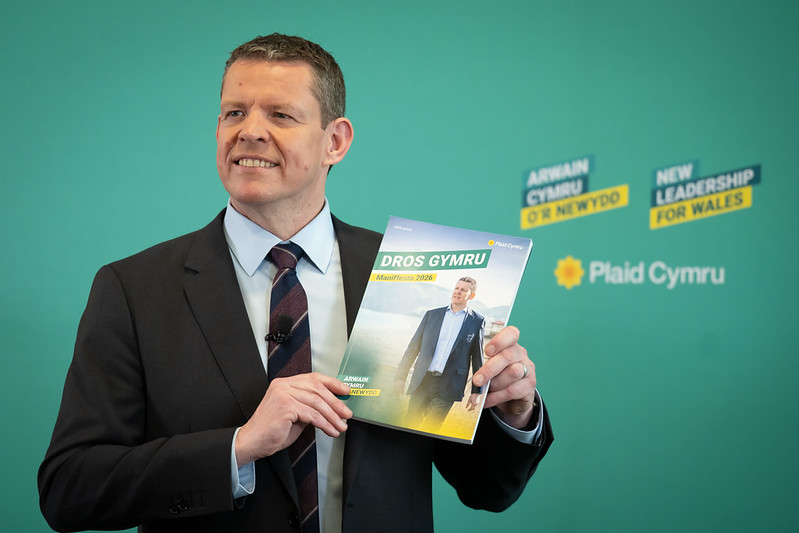
With longer-term goals of independence sidelined for now, Plaid Cymru is trying to appeal to people beyond its base and present itself as a credible government amid growing dissatisfaction with Labour, with promises to cut waiting times, expand free school meals for all secondary school students and reduce child poverty with a £10 payment pilot. The opinion polls suggest Plaid could be on the cusp of victory, though even if it loses out to Reform, there may be enough of a left-wing block in the Senedd to support Rhun ap Iorwerth becoming first minister.
Reform UK are in a seemingly two-horse race with Plaid to oust Labour, but with as much focus on themes such as tax cuts and immigration as on specific devolved policy, its position as a unionist party stands in contrast with Plaid’s more nationalist tendencies. Under the leadership of Dan Thomas, Reform has pledged to scrap Welsh-language targets, get rid of the scheme to help asylum seekers and ditch the 20mph speed limit in built up areas. There are similarities to the Conservative manifesto, but Reform may appeal to voters that the Tories have traditionally struggled to attract – offering a baggage-free blank slate for Welsh voters who feel disillusioned with the political status quo.
The Welsh Conservatives are entering the election in a difficult position, seeking to defend their relevance in a political landscape increasingly shaped by Labour’s decline and the rise of Reform as a populist challenger on the right. Under Darren Millar, the party has focused on incentivising Welsh students to study certain subjects, proposing a moratorium on large scale wind and solar farms, shaving a penny off the basic income tax, and declaring an NHS health emergency in the event of election. However, the party is on track to be overtaken as the main right-of centre force in Wales – and MSs are privately acknowledging the likelihood of losing seats.
PATH TO GOVERNMENT
There are a suite of changes being introduced for this year’s elections:
- the number of Members of the Senedd is increasing from 60 to 96
- the number of constituencies is reduced from 40 to 16, with six representatives each
- the five electoral regions, which previously returned 20 MSs, are abolished
Votes are cast for political parties (or independent candidates) and allocated through a closed proportional list system, meaning a broader spread of parties in the chamber is on the cards.
All signs point to a change in government in Cardiff after May 7, with Plaid Cymru and Reform UK projected to be the largest parties as Welsh Labour limps into a distant third place. But with 49 seats required for a majority, the new system could see Reform elect the most MSs and still end up in opposition. Plaid is expected to have the upper hand in negotiations over a potential coalition or power-sharing agreement, with the Greens expected to be willing partners – and a potential deal with Labour still a possible outcome.
RACES TO WATCH
Gwynedd Maldwyn
Comprising a large geographical area of northern Wales, the constituency is expected to be split between as many as five parties, with Labour forecast to come away empty-handed.
Bangor Conwy Môn
A constituency which could be represented by the next first minister, with Rhun ap Iorwerth standing as Plaid’s lead candidate. Reform’s deputy leader is also on the ballot.
Brycheiniog Tawe Nedd
Likely the best hope for a Lib Dem victory, with leader Jane Dodds the party’s lead candidate in a marginal seat also contested for Reform by Conservative defector James Evans.
Fflint Wrecsam
Reform and Plaid are projected to claim two seats each in a constituency contested by former Cabinet Secretary Ken Skates as Labour’s lead candidate; the party could even place last after the Conservatives.
Ceredigion Penfro
Incumbent First Minister Eluned Morgan is the number one candidate for Welsh Labour; voting projections suggest Plaid Cymru will return at least three MSs, leaving Morgan at risk of losing her seat.